
Understanding Clutter and Organization: What Your Home Is Really Telling You
Clutter is rarely just a pile of things in the wrong place. It is information. The basket by the stairs that never empties, the counter that collects mail and keys and everything else, the closet you brace yourself before opening - each one is telling you something about how your home is keeping up with your life, and where it has quietly stopped.
Most people read that signal as a personal failing. The truer reading is simpler: a space that no longer fits the way you live now. Routines change, households grow, careers get busier, and the systems that once worked fall a step behind. Understanding clutter and organization starts there - with curiosity about what the space is doing, rather than judgment about the people living in it.
This post is about how to read those signals, what they tend to mean, and how the right systems - and the right support - turn a space that works against you into one that holds up to a full, demanding life.
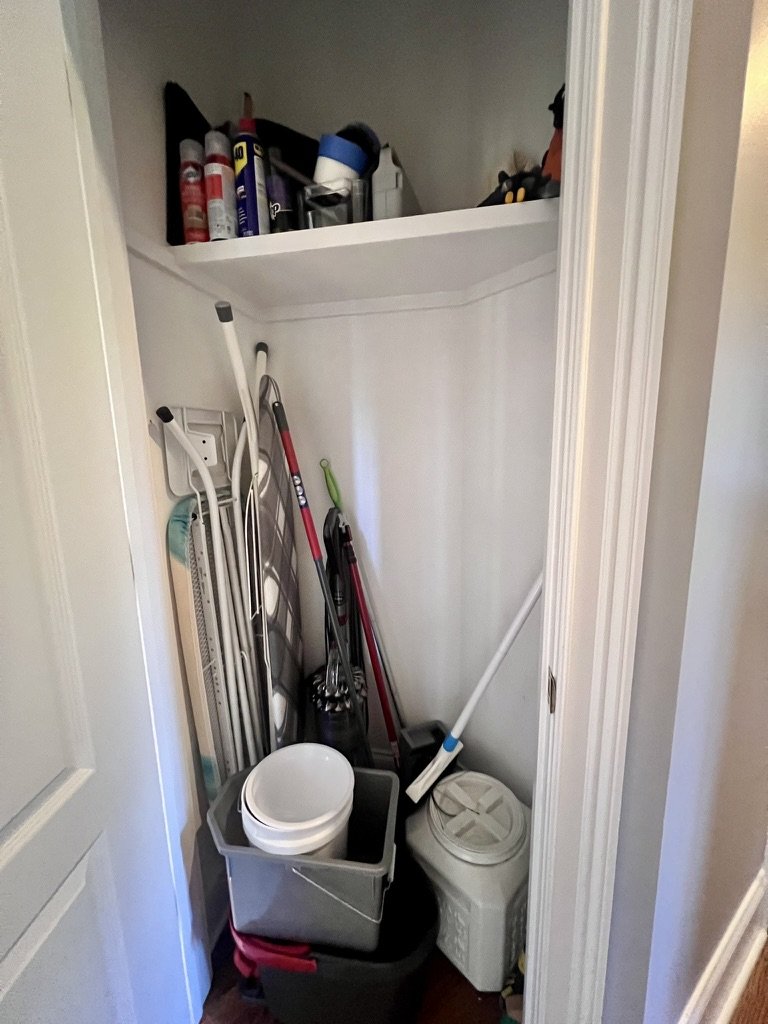
Every cluttered surface is a system that has fallen a step behind the life happening around it.
What Clutter Is Actually Telling You
When a home feels heavy, the weight is usually mental before it is physical. You walk past the same unfinished corner a dozen times a day, and each pass adds a small tax to your attention. That is the link between clutter and mental load: the space keeps asking you to make decisions you never get to finish.
Underneath almost every cluttered area is one of three things. Sometimes the storage simply isn't enough, or isn't in the right place, so items pile where they land. Sometimes the routine moves too fast for the system to keep up - the household outgrew the setup, and no one had a free afternoon to rebuild it. And sometimes the things themselves carry meaning, and letting go feels heavier than living around them. None of these is a character flaw. Each is a solvable problem once you can name it.
Reading the space this way changes what you do next. Instead of reacting to the mess on a hard day, you start making intentional decisions about what the space needs to do and how it should support the people using it.
Why Organizing Systems Have to Fit Your Real Life
A system that looks flawless in a photo is worthless if it doesn't survive a Tuesday. Organizing systems that work are built around how a household actually moves - where people drop their things, what gets used daily versus seasonally, who needs to be able to find what without asking. The goal is not a space that performs once; it is one that holds up on its own, week after week, without a constant reset.
That is the difference between tidying and building home organization systems. Tidying resets the surface; a system changes what happens by default. When everything has a logical place that matches the way you live, putting things back becomes the path of least resistance instead of another chore. The space starts working with you.
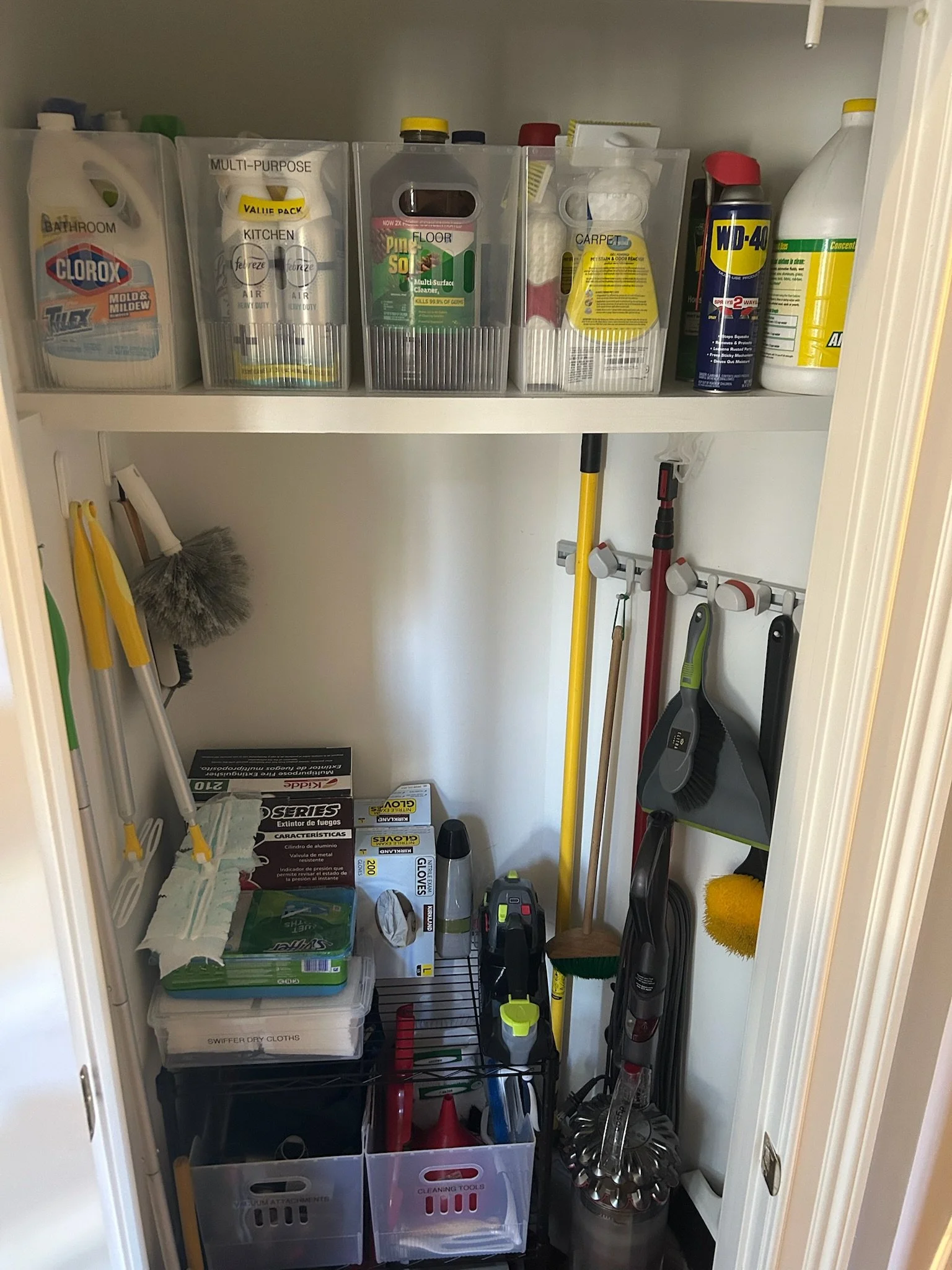
Sorting by category, not by room, is where a lasting system begins.
The Difference a Hands-On Partner Makes
Knowing why a space isn't working and having the time, energy, and method to fix it are two different things. This is where working with a professional organizer changes the experience. From the in-home consultation forward, the mental load of figuring it all out moves off your plate and onto someone whose whole focus is making the space work for you.
There is a real relief in not facing it alone. Many clients describe what shifts for them in their own words - before a project, and after.
Before a project, clients often tell us:
“I kept starting in one spot and somehow making three other areas worse. I knew it wasn’t working, but I couldn’t see a way through it, and there was never enough time to step back and figure it out.”
After working together, the same clients tell us:
“There’s a place for everything now, and it actually makes sense for how we live. I stopped dreading those rooms. It feels like the house is finally on my side.”
That shift - from carrying it alone to having it handled - is the quieter half of the transformation. The visible result is a space where things have a place and the day flows better. The part clients tend to mention first is the lightness of no longer holding all of it in their head.
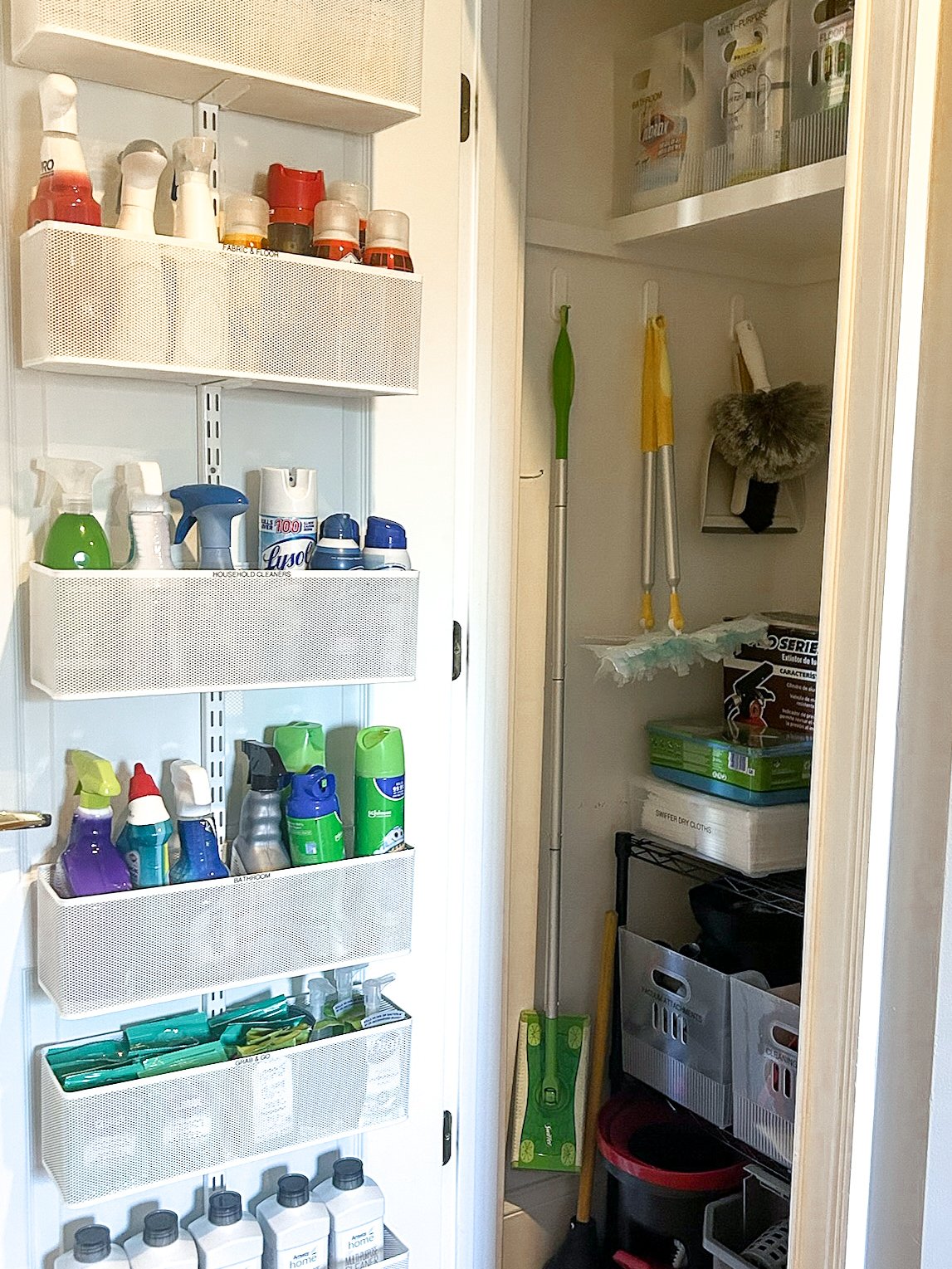
The finished space is the visible part; the relief of no longer managing it alone is the rest.
Where to Start When You Don't Know Where to Start
The hardest part is often the first decision. A useful starting point is not the biggest or messiest area, but the one whose disorder touches your day most - the spot you move through every morning, or the surface that sets the tone for the whole house. Easing the pressure there tends to give back the most, fastest.
From there, the work has a rhythm: take everything out, sort and categorize, decide what still serves the life you're living now, and rebuild the space in zones that match how you actually use it. It is methodical rather than quick, and it holds because each step is grounded in real habits rather than an idea of how things should look. If that process feels like more than you want to take on by yourself, that is exactly the point at which a professional decluttering partner is worth considering.
Questions Clients Ask
How do I know if I need professional organizing help?
If clutter is adding stress to your day, if you keep reorganizing the same areas without it lasting, or if a move, a new baby, or another life change has thrown off systems that used to work, that is usually the moment outside support makes the biggest difference. You don't have to be at a breaking point to ask for help; many clients reach out simply because they would rather have it handled well than keep wrestling with it.
Will organizing mean getting rid of everything I own?
No. The work centers on what serves you and the way you live; meaningful things stay. Editing is part of the process, but it happens at your pace and on your terms - the aim is a space that functions, not an empty one.
How long does the process take?
It depends on the size of the project and what you're working toward, so the pace is set to what feels manageable and effective for you. It begins with a discovery call and an in-home consultation, which is where we map the scope of work and build a plan around your space rather than a generic timeline.
Your home doesn't need to be perfect; it needs to fit the life happening inside it. If you're ready to understand what your space is telling you and build systems that hold, Make Space is here to help.
