
Drop Zone Ideas for Busy Families: A Landing Spot That Fits How You Live
In a busy household, the entryway does a lot of quiet work. It is where shoes come off, backpacks land, sports gear gets dropped, and the day's mail, keys, and water bottles all arrive at once. Without a plan for where those things go, the space near the door fills up fast - and that pile-up at the threshold sets the tone for the whole house.
A drop zone is the answer to that daily landing. At its simplest, it is a designated spot near the entry where the things your family carries in and out each day have a home. Done well, it does more than hold shoes; it gives everyone a clear place to land, which is what keeps the rest of the house from absorbing the overflow.
The drop zones that actually last are the ones built around how your household moves, not how a catalog says an entryway should look. Here is how to think through designing one for the way your family really lives.
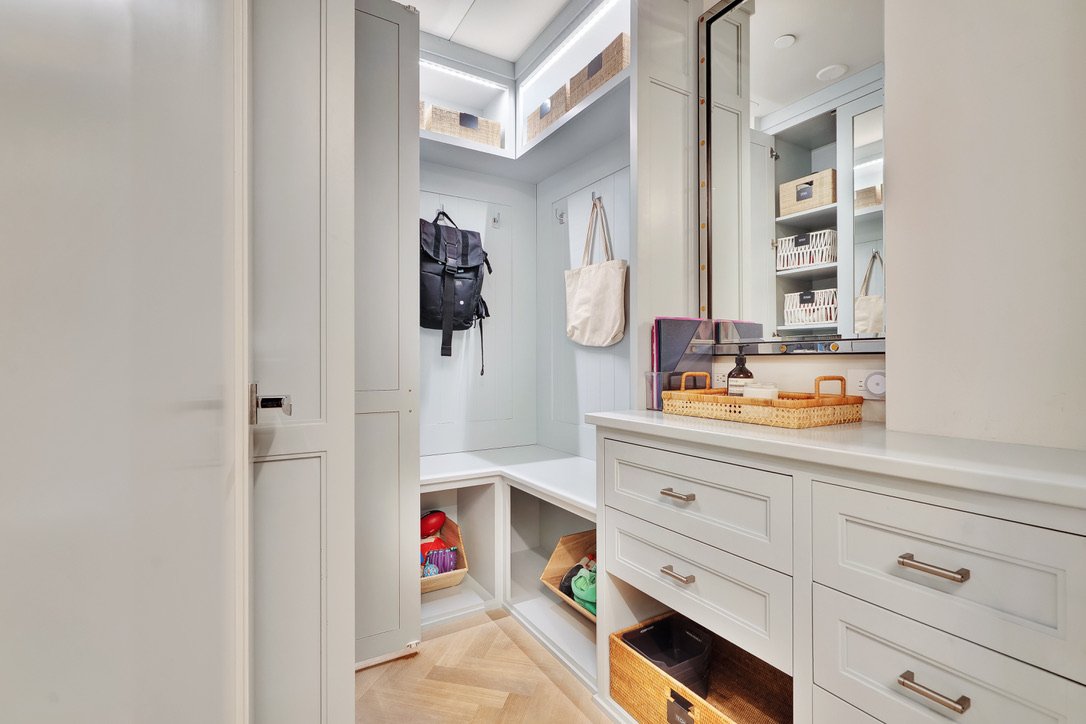
A drop zone earns its keep when every person and every daily item has a place to land.
Design the Drop Zone Around Your Family's Lifestyle
No two households run the same way, so a drop zone should be built to match yours. A family with several kids in sports needs room for cleats, bags, and equipment alongside the daily basics of shoes, jackets, and backpacks. A household with younger children needs hooks and bins at a height they can actually reach. Start by looking at what comes through the door on a normal weekday, then plan space for each person and each category, so things stop competing for the same surface.
The aim is a setup where every regular item has an obvious place. When each person knows where their things belong and can get to them without digging, the entryway stops being a bottleneck and starts moving the day along.
Location Is Key: Put the Drop Zone Where Your Family Actually Enters
The best drop zone is the one that sits where your family naturally comes in. For some households that is the front door; for many, it is the door from the garage or a side entrance that everyone really uses. Place it anywhere other than the true point of entry and it quietly gets bypassed, and the pile reappears wherever people actually land.
Not every home has a dedicated mudroom, and a drop zone doesn't require one. A hallway nook, a stretch of wall by the garage door, or a slim run of built-ins can all become a working landing spot. The question is never how much room you have; it is whether the spot lines up with the path your family already takes through the house.
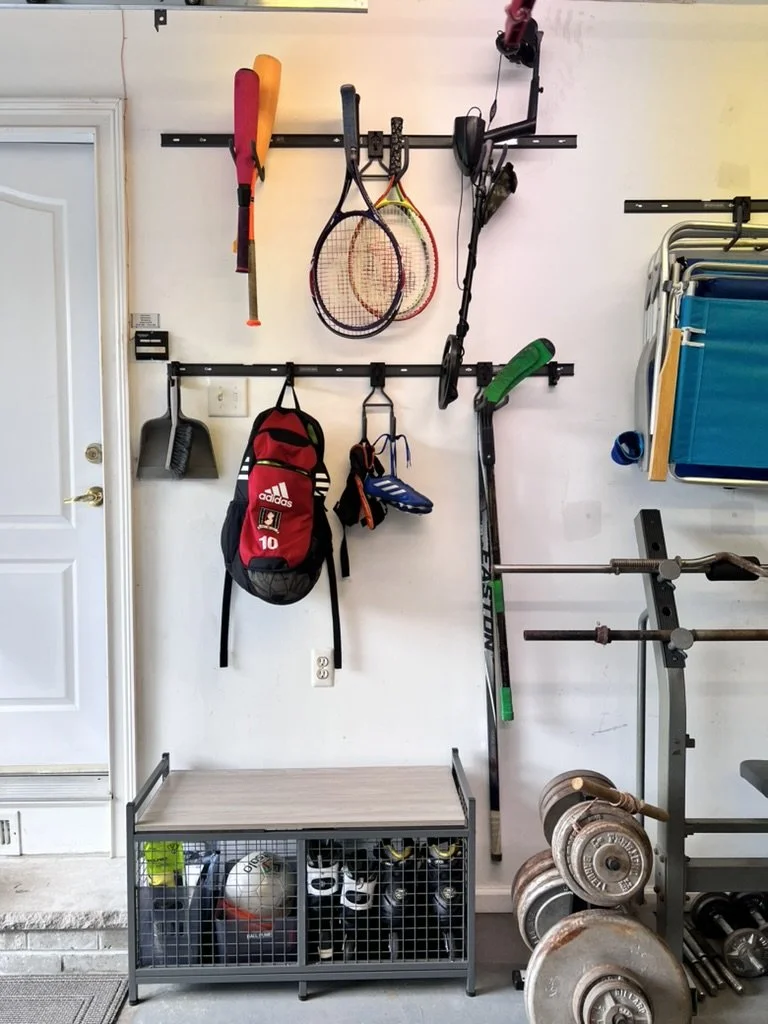
You don't need a mudroom; you need the right spot on the path your family already takes.
Concealed Storage Keeps the Entryway Working and Calm
A drop zone carries a lot, and concealed storage is what keeps all of it from reading as visual noise the moment you walk in. Cabinets, cubbies with doors, and lidded or lined baskets let the everyday items live right by the door without putting every single thing on display. The point is not to hide the function; it is to let the space stay accessible and easy to be in, so coming home feels settled rather than busy.
Open hooks and shelves still have their place for the things you reach for constantly. The balance to aim for is grab-and-go access for daily items, with the bulkier or messier pieces tucked behind a door or in a bin where they are handy but out of sight.
Help the Whole Household Use It
A drop zone only works when everyone uses it, and that depends as much on the design as on the habit. When a system fits how your family already behaves - hooks where kids naturally toss bags, a bin right where shoes come off - using it becomes the easy choice rather than one more thing to remember. The most reliable systems are the ones that meet people where they already move.
Habits still need a little reinforcement at first, especially with children, and gentle, consistent reminders go a long way in the early weeks. But when the setup matches your household's real routine, the system carries most of the weight on its own, and the entryway keeps working without becoming a daily negotiation.
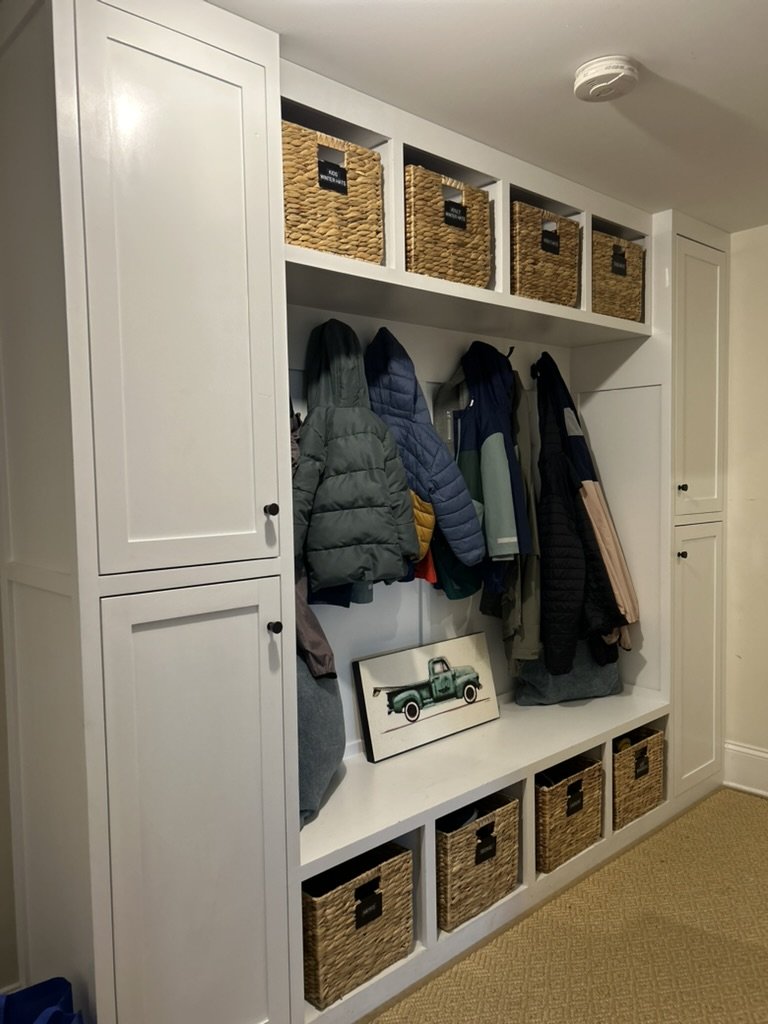
The best system is the one your family will actually use without thinking about it.
Questions Families Ask
What is a drop zone in home organization?
A drop zone is a designated spot near your main entry where the things your household carries in and out each day - shoes, bags, jackets, keys, and gear - have a defined home. It gives everyone a place to land so those items stop collecting on counters and floors throughout the house.
Do I need a mudroom to have a drop zone?
No. A mudroom is helpful, but a functional drop zone can be built into a hallway nook, a wall by the garage door, or a compact run of cabinets and hooks. What matters is that it sits where your family actually enters and has a place for each person's daily items.
How do I get my kids to actually use the drop zone?
The setup does most of the work. When hooks, bins, and shelves are at a reachable height and placed where children already drop their things, using the drop zone becomes the path of least resistance. A little gentle reinforcement early on helps the habit settle in.
A drop zone is one of the highest-return spaces in a busy home; get it right, and it steadies the start and end of every day. If you would like a landing spot built around how your household actually moves, Make Space is here to help.
